Steve Randy Waldman
@interfluidity.com
yes. but i think the blame will lie with the administration, whether catastrophes are a direct outcome of their actions, or a result of vulnerabilities the administration creates that others exploit.
Steve Randy Waldman
@interfluidity.com
sorry, i love light AI. suck the value out of all the plutocrat’s capex. may all their billions turn to dust while we run whatever fancy autocomplete we want on our laptops.
Steve Randy Waldman
@interfluidity.com
adversarial propagandists can always try this sort of thing, but they always could. i can’t recall a situation where it worked. COVID home toiletpaper was a rea shortage. The issue here isn’t adversarial propagandists, I think, but the actual Federal government.
Steve Randy Waldman
@interfluidity.com
Oh, they can wink pretty persuasively. It’s worker in Florida. At first they were afraid the workforce would flee, but they winked. www.tampabay.com/opinion/2023...
As DeSantis ships migrants from Texas, GOP legislators beg them to keep working in Florida | Column
Link Preview: As DeSantis ships migrants from Texas, GOP legislators beg them to keep working in Florida | Column: In a remarkable video that surfaced Monday, two GOP legislators begged migrant workers in South Florida to ignore the new immigration crackdown law that both of them supported.
Steve Randy Waldman
@interfluidity.com
just encountered a Rolls Royce SUV that looks like basically every other oversize SUV, and i think to myself wtf are you guys doing to your brand? looking forward to the Lamborghini minivan.
Steve Randy Waldman
@interfluidity.com
they’ve certainly tried to walk a line in Florida of talking a whole lot of scary shit but reassuring the illegal work force. i suspect pressure within their own coalition will render that the red state model.
Steve Randy Waldman
@interfluidity.com
to Grok “stripper” and “woman” are synonymous.
Steve Randy Waldman
@interfluidity.com
discretionary immigration enforcement to knee-cap blue state ag industries seems clever, until you realize food markets are mostly national and the economic advantage you give to red states will take the form to consumers either of high prices or shortages.
Loading quoted Bluesky post...
Steve Randy Waldman
@interfluidity.com
on the bright side, a military under Hegseth might struggle to defeat Greenland.
Steve Randy Waldman
@interfluidity.com
a thru line of the Trump Admin’s actions is testing the proposition nothing the Federal govt does matters or is any good. will ppl really die if PEPFAR is halted? is NIH just a job program for dorky Democrats? doesn’t FEMA just step on better informed states? isn’t the military just foreign aid?
Loading quoted Bluesky post...
Steve Randy Waldman
@interfluidity.com
yeah, sorry about that. bsky.app/profile/inte...
Loading quoted Bluesky post...
Steve Randy Waldman
@interfluidity.com
oh it's not. yes, perhaps that was ill-tempered, ill-timed, poorly expressed. but i just find it infuriating that the same political coalition that argues we have to accept unlimited profiteering for the sake of medical research and innovation has no problem killing the golden goose of NIH.
Steve Randy Waldman
@interfluidity.com
yes, but God forbid anyone weaken pharma patents and the ability to charge any ransom on the health of the sick, in the name of course of modern medical research.
Steve Randy Waldman
@interfluidity.com
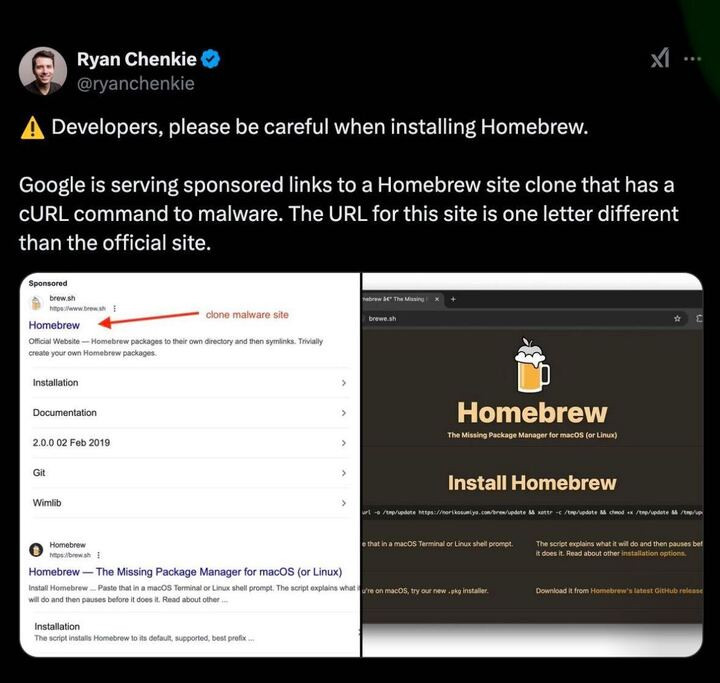
section 230 at the very least should not apply to paid content. freeradical.zone/@tek/1138847...
Tek say resist (@tek@freeradical.zone)
Link Preview: Tek say resist (@tek@freeradical.zone): Attached: 1 image Here's a Google ad impersonating the brew.sh website but linking to a malware site. Remember, it is always 100% morally and ethically OK to use ad blockers.
Steve Randy Waldman
@interfluidity.com
people are constantly accusing the federal government of being a jobs program, but that’s just Congress.
Steve Randy Waldman
@interfluidity.com
yes. that’d be great because the income pattern would be inherent to the business.
Steve Randy Waldman
@interfluidity.com
Steve Randy Waldman
@interfluidity.com
we hear it over and over and yet. no exit.