Steve Randy Waldman
@interfluidity.com
“Apple’s strategy in China has resulted in a transfer of technology and know-how so consequential as to constitute a geopolitical event” @patrickmcgee.bsky.social www.thetimes.com/business-mon... ht Brad Setser
How Apple helped China become America’s biggest tech rival
Link Preview: How Apple helped China become America’s biggest tech rival: Apple relied on cheap Chinese labour as it become the world’s most valuable company. But there was an unforeseen consequence: the millions of workers it trained would go on to transform the Middle Kin...
Steve Randy Waldman
@interfluidity.com
obviously i want to push out these authoritarians, even though of course not everything they do i’ll disagree with (substantively, i might procedurally). but much of the public is clearly more ¯\_(ツ)_/¯ about the authoritarianism. if it seems to deliver for them, they might increase their support.
Steve Randy Waldman
@interfluidity.com
This is fascinating. The claim is an enzyme has a domain unrelated to its main binding site that (accidentally?) regulates transcription of genes implicated in Alzheimer’s. Binding that domain with a small molecule can inhibit its role in advancing the disease. scitechdaily.com/scientists-d...
Scientists Discover Hidden Cause of Alzheimer’s Hiding in Plain Sight
Link Preview: Scientists Discover Hidden Cause of Alzheimer’s Hiding in Plain Sight: Researchers found the PHGDH gene directly causes Alzheimer’s and discovered a drug-like molecule, NCT-503, that may help treat the disease early by targeting the gene’s hidden function. A recent study...
Steve Randy Waldman
@interfluidity.com
that’s what social media is famous for!
Steve Randy Waldman
@interfluidity.com
i guess that’s right. it’s like envying a heroin smoker and getting what you want by developing a fentanyl habit.
Steve Randy Waldman
@interfluidity.com
it’s like elite Republicans believe their “Biden Crime Family” propaganda, but what they experience is not faux outrage over corruption, but a challenge to outdo their rivals in competition.
Steve Randy Waldman
@interfluidity.com
the symbolism that it will be Air Force One is really something. all those patriotically coded films, the President under threat or making hard calls from Air Force One. brought to you by the Emir of Qatar adds a new spin.
Steve Randy Waldman
@interfluidity.com
really?!? now that is some deep dish.
Steve Randy Waldman
@interfluidity.com
i refused the cookies. i should have asked for a plane. www.interfluidity.com/posts/125740...
Steve Randy Waldman
@interfluidity.com
“the White House and DOJ concluded that because the gift is not conditioned on any official act, it does not constitute bribery” thank Brett Kavanaugh and John Roberts for making this new day possible.
Loading quoted Bluesky post...
Steve Randy Waldman
@interfluidity.com
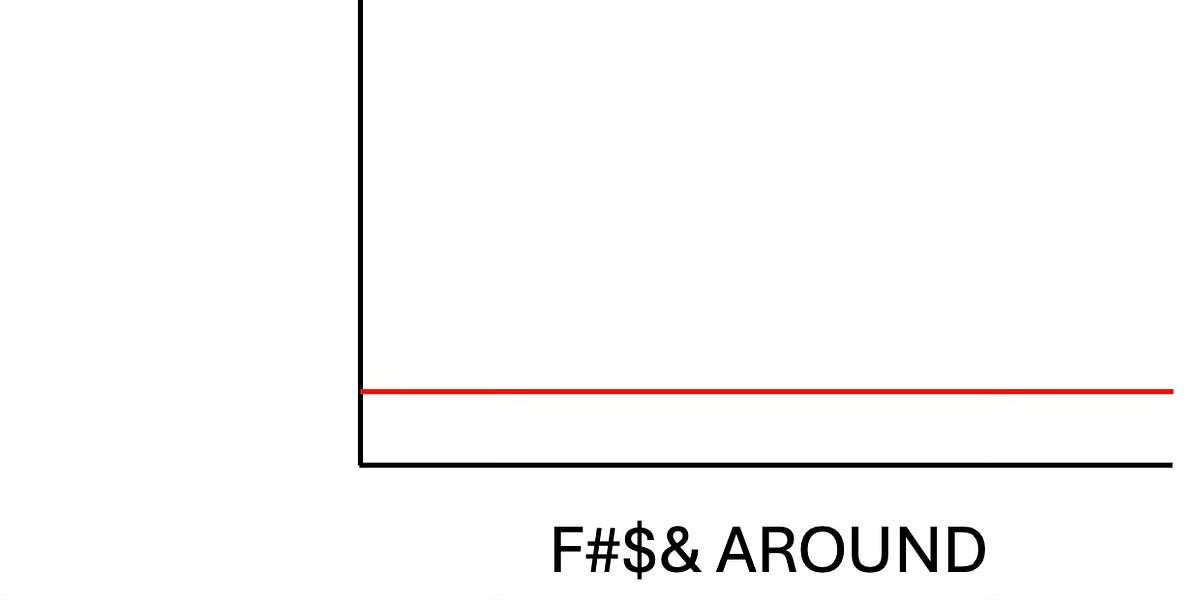
FADFO
Link Preview: FADFO: A lot of people have a 'need for chaos', as long as there's no chaos
Steve Randy Waldman
@interfluidity.com
i think this “reconciliation”, from a piece by me a while back drafts.interfluidity.com/2023/08/14/f... may hold for “communities” defined by demographics as well as by place.
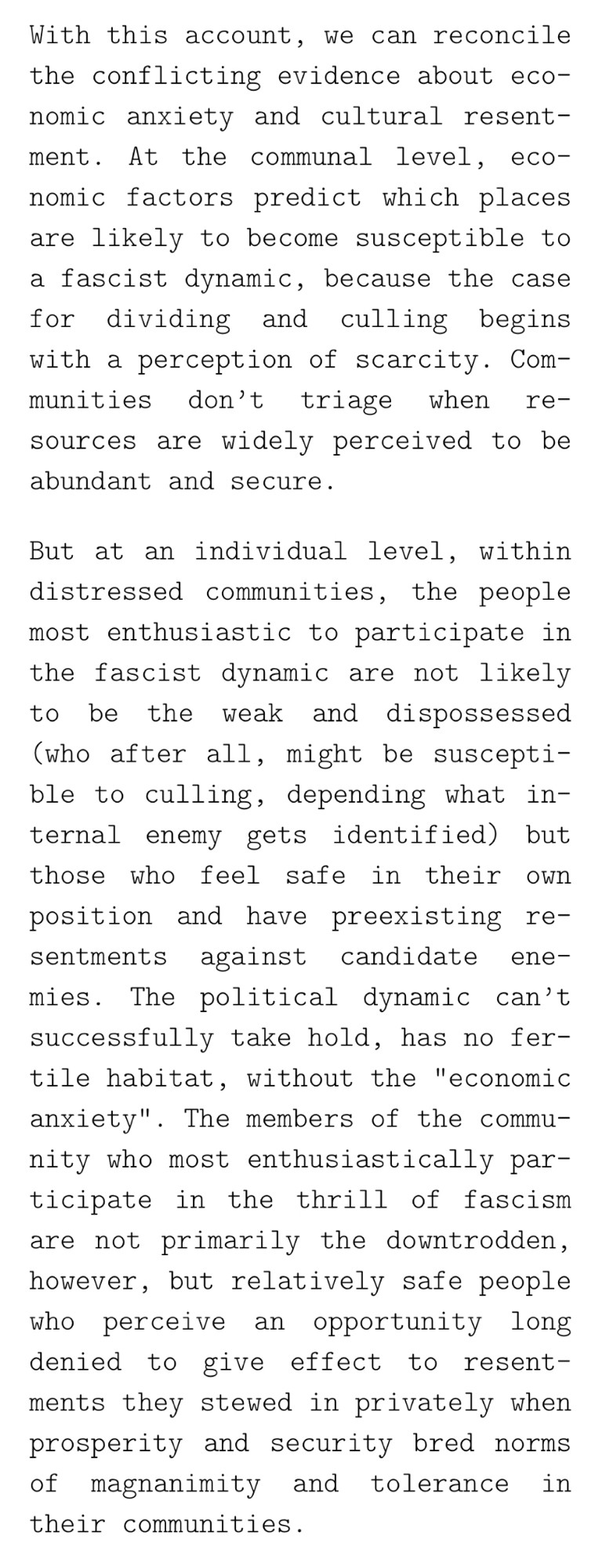 Text: With this account, we can reconcile the conflicting evidence about economic anxiety and cultural resentment. At the communal level, economic factors predict which places are likely to become susceptible to a fascist dynamic, because the case for dividing and culling begins with a perception of scarcity. Communities don’t triage when resources are widely perceived to be abundant and secure. But at an individual level, within distressed communities, the people most enthusiastic to participate in the fascist dynamic are not likely to be the weak and dispossessed (who after all, might be susceptible to culling, depending what internal enemy gets identified) but those who feel safe in their own position and have preexisting resentments against candidate enemies. The political dynamic can’t successfully take hold, has no fertile habitat, without the “economic anxiety”. The members of the community who most enthusiastically participate in the thrill of fascism are not primarily the downtrodden, however, but relatively safe people who perceive an opportunity long denied to give effect to resentments they stewed in privately when prosperity and security bred norms of magnanimity and tolerance in their communities.
Steve Randy Waldman
@interfluidity.com
we should refer to it as the nnylf effect.
Steve Randy Waldman
@interfluidity.com
they’re also the most “natural”. they literally train your body how to protect itself then fuck off and disappear.
Steve Randy Waldman
@interfluidity.com
yeah. that line was definitely a precursor to all this, and a reminder there’s more continuity than we sometimes like to imagine between these fuckers now and so-called “traditional Republicans”.
Steve Randy Waldman
@interfluidity.com
he’s working on it god bless him! still a much harder lift than just changing rates and brackets under existing law.