
Steve Randy Waldman
@interfluidity.com
📌
📌
people who interact too much on X just become worse people (at least as public figures online). i’m not sure how much of this is a selection effect, and how much is a treatment effect.
the United States’ strategy seems to be national suicide, except maybe AI will save us!
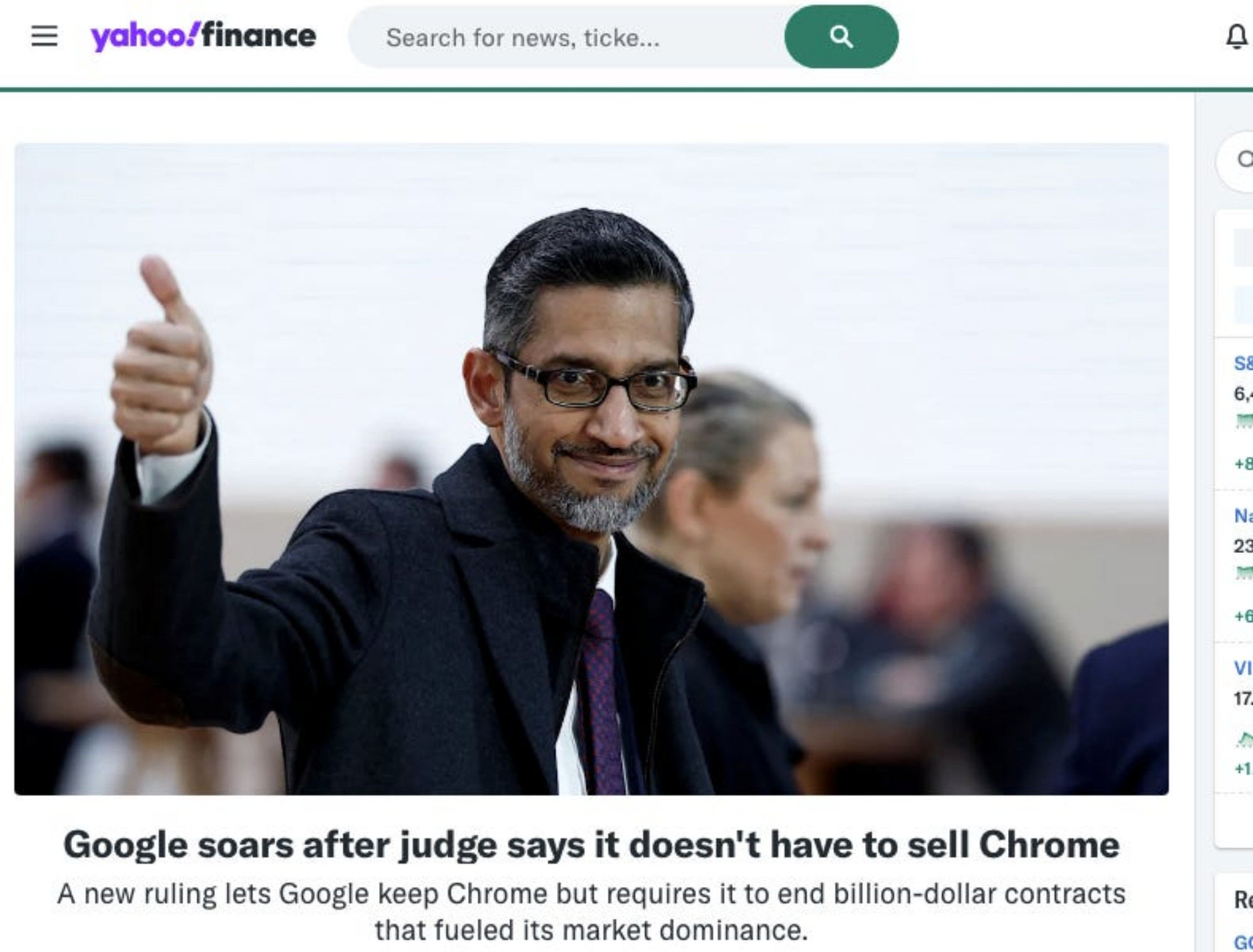
the Google remedy is the second tech decision where it seems to me plain law and precedent were ignored and subverted because a judge was too chickenshit to be responsible for remedies that would actually matter. ( The other was SEC v Ripple, www.cooley.com/news/insight... )

SDNY Rules Ripple’s XRP Token Was – and Was Not – a Security // Cooley // Global Law Firm
Link Preview: SDNY Rules Ripple’s XRP Token Was – and Was Not – a Security // Cooley // Global Law Firm: On July 13, 2023, US District Judge Analisa Torres of the US District Court for the Southern District of New York ruled that Ripple Labs’ token, XRP, was a security when sold to institutional in...
i don't like to think of myself as this kind of person, but the weakness of the remedies in the Google case (following the forthrightness in the decision finding Google guilty) has me wondering "how did they get to him?"
"Google’s leadership is utterly unchastened. Google CEO Sundar Pichai and chief legal officer Kent Walker will get bonuses for what they did… this decision isn’t just bad, it’s virtually a statement that crime pays." @matthewstoller.bsky.social www.thebignewsletter.com/p/a-judge-le...
A Judge Lets Google Get Away with Monopoly
Link Preview: A Judge Lets Google Get Away with Monopoly: Judge Amit Mehta had a chance to restore some semblance of the rule of law when he handed down a remedy decision in the Google case. He didn't. Google won this round. And Wall Street is rejoicing.
so much of solo software development is about faith. when working on a new project, for weeks or months most of the time you have nothing, just symbols and lost time, maybe some tests you can run, but not a thing that does the thing you want. many projects never escape this state. you gotta believe.
Loading quoted Bluesky post...
plutocrats buy the universities, fund tendentious research into the importance of tolerating plutocracy, along with "activism" along lines that villainize anyone and everyone but them. 1/
the public understandably loses trust in universities. 2/
plutocrats — always willing to serve! — support political movements that blame the universities and tears them to pieces. they finance influencers that make a strong case for tolerating plutocracy and activists along lines that villainize anyone and everyone but them. /fin
the good life!
(Oops. The stat isn't quite right. It's 0.000003 of the country's population, or 0.0003%. Still makes the same point.)
Loading quoted Bluesky post...
“America’s 1,135 billionaires make up 0.000003% of the country’s population. Collectively, they own $5.7 trillion, about 4% of the nation’s wealth.” @hamiltonnolan.bsky.social www.hamiltonnolan.com/p/all-the-th...
All the Things That You Need a Billion Dollars to Buy Are Bad
Link Preview: All the Things That You Need a Billion Dollars to Buy Are Bad: One way to think about inequality.
(Oops. The stat isn't quite right. It's 0.000003 of the country's population, or 0.0003%. Still makes the same point.)
so, basically we’re rebooting the “anti-terrorist” Middle East drone assassination program as an “anti-drug-trafficking” extralegal execution program in Latin America and the Caribbean?
sure! @michaelpettis.bsky.social has also proposed capital taxes to address imbalances.
“As new technologies emerged, Alphabet and its peers bought and swallowed them, in much the same way the Greek god Kronos ate his children to prevent their emergence as rivals.” @bcappelbaum.bsky.social www.nytimes.com/2025/09/02/o...

Opinion | The Government Just Walloped Google. That’s Good Business.
Link Preview: Opinion | The Government Just Walloped Google. That’s Good Business.
“The moral of the story is: Never trust an A.I. system… Never trust a chatbot, because it’s a puppet whose strings are being pulled behind the scenes.”
Loading quoted Bluesky post...
does this mean that i'm a blueskyist?
hits different right now.
 Screenshot of e-mail from Donald John Trump, subject "I want to try and get to heaven."
"It’s amazing how many Americans put more than their best foot forward when they are trying to convince a bank to back their mortgage."
Loading quoted Bluesky post...
and sandwiches are tastier.
he’s accessible on Mastodon! @pluralistic@mamot.fr there.