
Steve Randy Waldman
@interfluidity.com
we are so fortunate to have two stable geniuses.
we are so fortunate to have two stable geniuses.
a hint of sarcasm was intended there.
“the only country that has both the resources and the capacity to make credible commitments regarding academic freedom is Norway.” @rajivsethi.bsky.social rajivsethi.substack.com/p/body-blows...
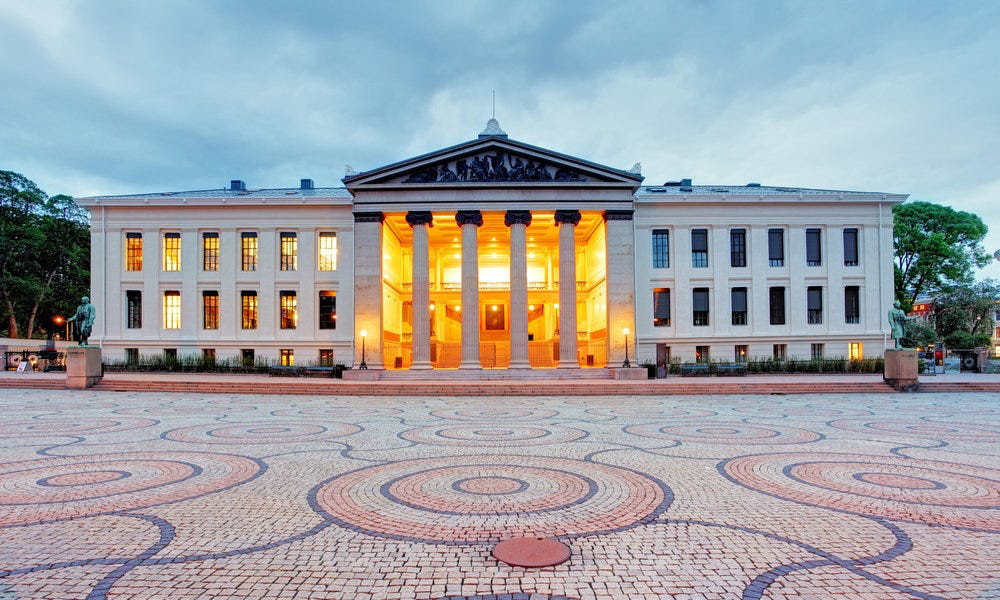
maybe someone should found a university that — i know this is novel — would be governed by its faculty.
at the margin, of course particular institutions matter. there is a project on the verge of getting built that will with more favorable institutions but won’t without. but the question is quantitative. 1/
one position is basically lots of housing would get built if only, say, zoning laws were more friendly. another position is there aren’t so many projects so close to the margin, given the inherent difficulty of getting infill done in affluent, already desirable neighborhoods, against opposition. 2/
i think the second position is closer to accurate than the first. that doesn’t mean some good projects wouldn’t happen with less restrictive eg zoning laws that fail to happen under the status quo. /fin
I guess the fundamental dispute is between those who think the change has to do with particular institutions of local democracy vs preferences and enfranchisement of people that will find expression under nearly any stable economic order. @dsquareddigest.bsky.social and i think it more the latter.
(note that the old “growth machine” urban politics were not primarily infill of already desirable, prosperous, enfranchised neighborhoods. eventually austins become houstons or dallases as a matter of scale and already-developedness, despite friendly zoning regimes.)
many dense places people behave quite considerately! no 3am 2 live crew when we lived surrounded by apts in SF.
i’m a very live and let live person mostly, but i make an exception for gas powered landscaping equipment, my apt complex is neurotic about staying attractively landscaped and it drives me mad.
(already did!)
a great, short account of why anti-NIMBY-ism is likely always to be an inadequate solution to the scarcity of desirable housing, by @dsquareddigest.bsky.social.
Loading quoted Bluesky post...
do the “deep research”, “agentic” AI tools know how to avoid AI slop?
i prefer not to be anything pilled.
if Cecil Rhodes was “responsible for the deaths of as many as 20,000 Africans” his successor has now very easily outdone him. (despite trying so hard, the author of this terrible piece cannot help but confess little good and enduring came of Rhodes’ “energetic”s. but somehow we should hope for Musk)
Loading quoted Bluesky post...
“A key to the pathology of the radical right it offers both a powerful sense of aristocratic elevation and a deep sense of wounded victimization. While in many senses contradictory, this combined sense of being better and being wronged is exceptionally attractive.”
Loading quoted Bluesky post...
cc @poetryforsupper.bsky.social it’s interesting to contrast the hostility to Christianity in these thinkers, as a fountainhead of universalism and therefore democracy, liberalism, socialism, versus the role of evangelicalism today.
credit rating agencies, but for how much we should credit public figures' utterances.
we’re all gonna be rich!
Loading quoted Bluesky post...
when the world’s biggest nuclear power has its nuclear weapons infrastructure bombed, it’d please me if leading world governments had diplomats trained in diplomacy rather than trolling.
they may come off as innocuous, but poets have very deep connections to organized rhyme.
📌
“Constitutionally, Congress is a superior branch of government to the presidency, and it is explicitly designed to check the president.” @davidfrenchjag.bsky.social www.nytimes.com/2025/06/01/o... // yes.

Opinion | Why Trump Is Mad at the ‘Sleazebag’ Leonard Leo
Link Preview: Opinion | Why Trump Is Mad at the ‘Sleazebag’ Leonard Leo